Tuesday, December 26, 2006

O, little town of Bethlehem


May we be reminded in this Christmas season how we can help bring peace to the region of Christ's birth. This was sent to me by a friend along with these links:

"What would happen if the Virgin Mary came to Bethlehem today?"
http://news.independent.co.uk/appeals/indy_appeal/article2097790.ece

And more about the wall in Bethlehem, a Christian and Muslim mixed region of the occupied territories.
http://www.openbethlehem.org/

Thursday, December 21, 2006

Iraqi bloggers

I saw this on BBC today- thought it was a nice way to get a different perspective from what we hear on the news everyday: http://news.bbc.co.uk/2/hi/talking_point/6194329.stm

Thursday, December 07, 2006

Is diplomacy our LAST resort?

So at last a group has come together to try to solve the problems in the Middle East. I thought this would be the sort of thing that should happen before a nation decides to go to war. At times I wonder why they even taught us diplomacy in college- is it so we know exactly what we shouldn't do? Was it a waste of time for me to study international relations, since being diplomatic seems to be something the "real world" doesn't do or take seriously? Maybe I'm not getting the big picture here. Is it really a question of either putting one's own nation's interests before trying to have good relations with other nations? Or have leaders just not reached the point where they can learn to reconcile the two (which in fact, I do see as going hand in hand!)?

Now we are back to square one- but this time we have our wings clipped off. This is exactly what should have been discussed before sending troops to Iraq and loosing thousands of lives on both sides. Whether they were troops, children, mothers, fathers... it doesn't matter, everyone is innocent in a way- either they aren't fighting or they are legitimizing it by being convinced that they are defending a cause. I thought leaders would've considered every single option before engaging the lives of others in the affair. Making a regime change in a completely foreign country, oceans away, with an extensive history, a different culture and world view is not a piece of cake. Primarily however, it isn't something that can be done unilaterally. With being a super power comes responsibility- you can't be arrogant about it, you have to work with the world so they can begin to respect you.

It is now that leaders in America are starting to realize that you can't just "talk to your friends, you have to talk to your enemies too" in order to get anywhere. Unfortunately, the administration wasn't even talking to their friends when this all started. The warnings from the friends were shunned or they were humilated and the so-called enemies were demonized even more. Why? Well, it's considered weak to talk to ones enemies, but how else can you get anywhere? It seems that now the US is cornered and has no way but to follow the diplomatic route- it is too bad that it had to take this long for them to realize that, but at least we know we are coming close to the end of this nightmare.

Issues in the rest of the Middle East will now get more attention- especially the Palestinian/Israeli issue which had seemed to be heading toward a dead-lock. I'm glad that peace will at last be given a chance - it's really all it needs and there are plenty of people out there who are prepared to help support it, whether it's getting there or the healing that will have to take place afterwards to reach a positive peace. The light at the end of the tunnel seems to be a bit brighter now that we are beginning to be a little more diplomatic.

Wednesday, November 22, 2006

Pierre Gemayel’s Demise: Time to deviate from the "circle of violence"

Here is an interesting article that was sent to me by a professor in Lebanon. With this relatively new pro- and anti-Syrian division (at least it's new in the sense that it's at such a deep level), it is a perfect opportunity for any side to easily make people start pointing fingers. This is the same sort of assasination that was going on before the summer war- plots to further divide the country (although some also argue that this is purely a timely act of revenge toward the Gemayel family dating back from the time of the 1975-1990 civil war). The difference is that the people are ultra-sensitive at this point and the government has already been weaken after the withdrawal of six of it's parliament members. Positively, Pierre's father (part of the March 14th Forces) has called for a peaceful reaction to this tragic event, in the hopes of avoiding a civil war. It took a strong person to respond to the death of his son this way-- for the sake of his country.


Date: Tue, 21 Nov 2006 18:34:05 -0500

Gemayel Assassination and the Lebanon Circle of Violence
by Rami G. Khouri

BOSTON -- The assassination of Lebanese member of parliament Pierre Gemayel Tuesday sadly does not represent any new direction in Lebanese politics, where targeted killings have scarred the political landscape for years. But it will quickly accelerate and exacerbate existing tensions that reflect a much wider regional and global battle that has been underway for the past year.

The real issue at hand here is
Syria's continued and deeply contested influence in Lebanon -- even though Syrian troops left Lebanon three months after Damascus was blamed for the killing of former Prime Minister Rafik Hariri in February 2005. The rapid and robust international outcry and accusations against Syria, Iran and Hizbullah similarly indicate that this battle will not be decided only by local forces in Lebanon.

It is telling that the main political forces in
Lebanon are still identified today as pro- or anti-Syrian. Immediate anger in Lebanon has been directed against the Syrians and their Lebanese allies รข€“ mainly Hizbullah and President Emile Lahoud, but also to an extent Christian leader Michael Aoun. They have all condemned the crime, avowed their innocence, and called for calm in Lebanon.

This crime is in line with half a dozen other attacks and killings of prominent Christian media and political figures in the 19 months after the Hariri assassination. The young Gemayel was not a leading political figure in terms of experience or influence; but, his pedigree Christian and Lebanese nationalist lineage made him a powerfully symbolic target for anyone who aimed to enrage the largely Christian-led anti-Syrian and pro-Western camp in
Lebanon.

Many observers find it hard to see how
Syria -- if indeed it were the culprit -- would benefit from committing such a crude crime, given its intense scrutiny by the Security Council-mandated investigation into the recent string of political assassinations in Lebanon. Syrian opponents, on the other hand, say the regime is trying systematically to terrorize and intimidate the Lebanese political class into submission, so that Damascus can revert to its previous status as overlord of all Lebanon.

Culpability and innocence are not the real issue at hand today. Rather, it is the ideological battle for the control of
Lebanon's soul and political system -- pitting Arabism and Islamism, on the one hand, against a liberal, Western-oriented cosmopolitanism on the other. That battle will be determined in years to come by events in Syria, Iran and Washington, more than in Beirut.

The fear for
Lebanon now is that this assassination completes a terrible circle of violence and tension that threatens to explode into much worse degradation. In recent months, Lebanon has suffered a violent war with Israel, massive destruction of infrastructure and -- mainly Shiite -- residential areas, internal political threats and confrontations, a nearly crippled cabinet due to the resignation of six pro-Hizbullah members, the specter of massive street demonstrations, a stalled economy, more overt external political interference by Middle Eastern and Western powers, concerns about a growing Al-Qaeda-linked presence in the country, and renewed mutual squabbling about the legitimacy of the president and the cabinet.

The resumption of political assassinations threatens to explode the political situation along its major fault lines: Syria-friendly forces aligned around the core proven power of Hizbullah and its allies, and Syrian opponents centered around Hariri- and US-backed prime minister Fouad Siniora and his March 14 coalition.

Hizbullah in the past month has challenged the Siniora government politically, calling it a
U.S. puppet and demanding that it be expanded and revised to give Hizbullah and its allies a greater share of power. Speculation is rife that this aims primarily at emasculating the international tribunal being established now to try those who will be accused of the Hariri and other murders.

The
United States and other Western powers forcefully support the Siniora government, just as they supported Israel in its military assault on Hizbullah in the summer. They expect the UN investigation of the Hariri murder and the new international tribunal to shatter or at least moderate the Syrian regime and security system that they blame for Lebanon's ills.

The real concern now is that the Gemayel assassination will trigger anti-Hizbullah and anti-Syrian anger that will aggravate internal tensions and turn them violent, while simultaneously heightening explicit American diplomatic confrontations with Hizbullah-backers
Syria and Iran.

Washington may temper this approach if it decides it needs Syria and Iran to help it exit gracefully from Iraq -- in which case Lebanon may get only rhetorical support, while Washington strikes a self- serving deal with Syria to salvage Iraq. This is the great fear of many Lebanese, especially after seeing
Washington's commitment to Lebanese sovereignty and security go into temporary summer hibernation during Israel's attacks this summer. In either case, this spells rough days ahead in Lebanon and the region.


Rami G. Khouri is an internationally syndicated columnist, the director of the Issam Fares Institute at the
American University of Beirut, editor-at-large of the Beirut-based Daily Star, and co- laureate of the 2006 Pax Christi International Peace Award.

Monday, November 20, 2006

Rayess Bek: The underground Lebanese rapper

Here are a few songs from a young artist who calls himself Rayess Bek (meaning the top leader/president). These songs came out in 2005 around this time. One of my flatmates introduce me to this Lebanese rapper and told me that he grew up in France most of his life. He doesn't write or read Arabic well (if at all) but does speak it- therefore his songs are mainly in Arabic, but these that I posted are mixed with French lyrics. Since I only understand the French well enough, I will post my translation of the French sections. The song "Lahza" is purely in Arabic- it speaks of the Lebanese immigrant experience.

I know I can't post the whole song on the internet, but I was hoping that I could at least put up a portion of it. It seems that can't be done either, so I will just recommend that you go to his website, where you can listen to some of his stuff, but the songs I speak of aren't on the website. Either way, here is the website: http://www.rayessbek.com/


(i'll be posting the translations soon)

Monday, November 13, 2006

Why we fight

This is a documentary I think is really worth watching. My brother recommended it to me not too long ago. Much of it may be old news to you by now, but there are a lot of great points that are brought up. It is not a politically biased documentary aimed at criticizing opposing views, it merely brings us back to take a look at our American principles, some founding ideas, mistakes and warnings from past American leaders who have learned from these mistakes. Unfortunately, these warnings have clearly been ignored, but this doesn't mean it is too late to get back on track and avoid deviating from these fundamental American values. Here is a link to see a preview of the documentary and find out more about it: http://www.sonyclassics.com/whywefight/

What is all the fuss about?

So many people just don't get why a country that has been attacked by an outside force is more divided now than it was before the attack. I've had a few friends ask me that question, but I feel that it is a bit mind-boggling to try to understand if you have never been exposed to Lebanese politics. I myself am still trying to fully understand the obstacles to unifying the country.

For now however, this is how I see it. One of the obstacles is the location, because Lebanon is surrounded by two opposing states, Israel (seen as a pro-western state) and Syria (seen as anti-western), the country is being pushed and pulled by both forces. Now, why have Jordan or Egypt not gone through the same problem? This is where the second obsatcle comes in: the diverse nature of Lebanon and it's confessional state of mind. Part of the country favors a more "pro-western" stance while another part of the country would rather be more integrated with the mainstream Middle Eastern political views.

So why has the country not unified after an attack on the entire country? Well, it did (superficially) while it was being attacked. However, in the aftermath, people started to point fingers as to who got the country in this mess. Pent up frustrations and grudges held from the time of the civil war have started to surge up yet again, causing the already fragile state of the country to tear apart.

On the surface, the country sees itself as striving to be unified- everyone brags about being Lebanese and flaunts their nationalistic sentiments (especially since the Hariri assasination). However, everyone has their own image of Lebanon- a Lebanon in their own eyes, it's the pride that they have still been able to survive in the country and have a voice. But each want the country to be their way, favoring their sect and protecting their identity and interests. This is where the complications come in. Each person has a different agenda and refuses to make consessions or compromises for the improvement of the country. The same warlords from the time of the civil war have returned to lead their groups and hope to have their way. Another obstacle is the changing demographics of Lebanon, which are pushing tensions even further as some sects are losing force and others are gaining support.

If the so-called leaders of the country were really committed to a national unity, they would be more willing to listen to their fellow citizens rather than outside forces. But because the wounds of the civil war are still relatively fresh, it is difficult to expect the country to have matured to that point yet. In short, this is a tug-of-war, in the literal sense. In this game however, the rope is a rubberband that looks like it might snap any day now.

Wednesday, November 01, 2006

Words from a wise clown :-)

Published on Tuesday, October 24, 2006 by CommonDreams.org

On November 7, Be Smart: Vote for Love

by Patch Adams

While the State Department’s Alberto Fernandez felt obligated to take back his comments that elements of U.S. policy in Iraq have been arrogant and stupid, the truth is that U.S. policy post-9/11 has been driven by arrogance and stupidity. What could be stupider than the idea that violence could end the threat of terrorism and make us safer at home? Simple logic tells us that responding to terror with more violence will only lead to more terror and more violence. Now we have that logic confirmed by the grim facts on the ground in Iraq.

Isn’t it time for a radical change of course? There’s only one thing more powerful than violence, and that’s love. So shouldn’t we be fighting violence with love? I don’t mean relational love. I mean treating people with love. Feeding them. Educating them. Healing them. That kind of love.

As a doctor—and a clown—I’ve seen the tremendous healing power of love. The number one factor for surviving a heart attack is having a loving community. A study of 4,000 women with breast cancer found that with a little love—six hour-long support sessions—their survival rate increased five-fold. With the situation in Iraq imploding, tensions increasing with Iran and North Korea, and our government’s policies leading more and more people to hate Americans, it’s time to take the healing power of love to the global level. It’s time for a love platform.

What’s a love platform? It’s a set of policies that shows compassion for the elderly, the mentally ill, the homeless, the poor. It’s a platform that treats the environment with the loving respect it deserves.

A love platform would call for kissing, not killing. You switch two little letters and you get a whole new outlook on life. Kissing, not killing.

A love platform would put women in charge—women with loving instincts who would treat the world the way my mother treated my friends when they came to my house. She fed them, she wiped their noses, she was nice. That’s it. We’d have a policy called “Be Nice.” If everyone treated people like my mother did, we’d put an end to violence.

We need to create a massive global movement for loving. It would be like the Peace Corps times 10,000. People who have resources would go, en masse, to help those without. People with skills would teach those without. People who are healthy would take care of those who are sick.

We’d save cabinet positions for the Amish people who embraced the family of the man who killed their children. We’d put in charge of foreign policy the people who lost loved ones on 9/11 but insisted that revenge was not the answer, or the women of CODEPINK who tried desperately to stop the war in Iraq before it even began.

It really amazes me that we spend so many hours as a society focusing on love as sex or love that some consider perverse: Mark Foley sending emails to underage boys, Bill Clinton with an intern, love between people of the same sex. But we spend no time focusing on the big love that should drive our lives and our policies, i.e. love for the human family. We spend no time in school teaching young people how to grow up to be loving adults. The media gives us never-ending examples of violence and hate, but rarely gives us the uplifting examples of the kid who spends his lunch money on feeding the homeless. We hear about the brave soldiers who fight, but not about the people—often women—who force the soldiers to put down their guns.

For those who say that a love platform is ridiculous and naive, I ask them to compare the results of the $300 billion we’ve spent on war in Iraq with what we would get if we had spent that money on setting up health clinics all over the world and feeding people who are hungry. I travel around the world and meet lots of people who fear and hate us. If we spent our energy and resources uplifting people in need—spreading laughter and light instead of bombs and bullets—we’d live in a world that was happier, healthier and safer.

So come November 7, be smart. Vote out stupid and arrogant candidates who think that occupying Iraq by force or bombing Iran will make us safe. And vote for candidates who understand the simple notion that love is not only the best medicine, it’s also smart policy.

Patch Adams, M.D., is a nationally known speaker on wellness, laughter, humor and life. To support peace candidates, go to www.givepeaceavote.org.


For more information on Patch Adams and the Gesundheit Insitute that he founded, go to his website: http://www.patchadams.org/home.htm


Sunday, October 15, 2006

Lessons from the Amish


Is the path of revenge really the best way to solve ones problems? Does it ensure that such disasters will not happen again or does it just further perpetuate the chances of it repeating itself? Is it how (or the only way) one makes justice prevail? This article speaks of how the Amish community reacted to the recent shooting without a spiteful attitude, arguing whether the often natural reaction many people have to get revenge is really the best remedy to ones problems.*


Published on Friday, October 6, 2006 by CommonDreams.org
What the Amish are Teaching America
by Sally Kohn


On October 2, Charles Carl Roberts entered a one-room schoolhouse in the Amish community of Nickel Mines, Pennsylvania. He lined up eleven young girls from the class and shot them each at point blank range. The gruesome depths of this crime are hard for any community to grasp, but certainly for the Amish — who live such a secluded and peaceful life, removed even from the everyday depictions of violence on TV. When the Amish were suddenly pierced by violence, how did they respond?

The evening of the shooting, Amish neighbors from the Nickel Mines community gathered to process their grief with each other and mental health counselors. As of that evening, three little girls were dead. Eight were hospitalized in critical condition. (One more girl has died since.) According to reports by counselors who attended the grief session, the Amish family members grappled with a number of questions: Do we send our kids to school tomorrow? What if they want to sleep in our beds tonight, is that okay? But one question they asked might surprise us outsiders. What, they wondered, can we do to help the family of the shooter? Plans were already underway for a horse-and-buggy caravan to visit Charles Carl Roberts’ family with offers of food and condolences. The Amish, it seems, don’t automatically translate their grieving into revenge. Rather, they believe in redemption.

Meanwhile, the United States culture from which the Amish are isolated is moving in the other direction — increasingly exacting revenge for crimes and punishing violence with more violence. In 26 states and at the federal level, there are “three strikes” laws in place. Conviction for three felonies in a row now warrants a life sentence, even for the most minor crimes. For instance, Leandro Andrade is serving a life sentence, his final crime involving the theft of nine children’s videos — including “Cinderella” and “Free Willy” — from a Kmart. Similarly, in many states and at the federal level, possession of even small amounts of drugs trigger mandatory minimum sentences of extreme duration. In New York, Elaine Bartlett was just released from prison, serving a 20-year sentence for possessing only four ounces of cocaine. This is in addition to the 60 people who were executed in the United States in 2005, among the more than a thousand killed since the reinstatement of the death penalty in 1976. And the President of the United States is still actively seeking authority to torture and abuse alleged terrorists, whom he consistently dehumanizes as rats to be “smoked from their holes”, even without evidence of their guilt.

Our patterns of punishment and revenge are fundamentally at odds with the deeper values of common humanity that the tragic experience of the Amish are helping to reveal. Each of us is more than the worst thing we’ve ever done in life. Someone who cheats is not only a cheater. Someone who steals something is not only a thief. And someone who commits a murder is not only a murderer. The same is true of Charles Carl Roberts. We don’t yet know the details of the episode in his past for which, in his suicide note, he said he was seeking revenge. It may be a sad and sympathetic tale. It may not. Either way, there’s no excusing his actions. Whatever happened to Roberts in the past, taking the lives of others is never justified. But nothing Roberts has done changes the fact that he was a human being, like all of us. We all make mistakes. Roberts’ were considerably and egregiously larger than most. But the Amish in Nickel Mines seem to have been able to see past Roberts’ actions and recognize his humanity, sympathize with his family for their loss, and move forward with compassion not vengeful hate.

We’ve come to think that “an eye for an eye” is a natural, human reaction to violence. The Amish, who live a truly natural life apart from the influences of our violence-infused culture, are proving otherwise. If, as Gandhi said, “an eye for an eye makes the whole world blind,” then the Amish are providing the rest of us with an eye-opening lesson.

Sally Kohn is Director of the Movement Vision Project at the Center for Community Change and author of a forthcoming book on the progressive vision for the future of the United States.

*Picture take from BBC News

Saturday, October 14, 2006

Economist wins the Nobel Peace Prize 2006

Bringing peace is not all about just having those peace talks, negotiations etc. Economic development is just one (very important) part of the puzzle! From BBC News (posted on Friday) here is a little of the good news....


Nobel for anti-poverty pioneers
Muhammad Yunus of Bangladesh and the Grameen Bank have been jointly awarded the 2006 Nobel Peace Prize.

Mr Yunus, an economist, founded the bank, which is one of the pioneers of micro-credit lending schemes for the poor, especially women, in Bangladesh.

Mr Yunus, 66, said he would use the 10m Swedish kronor ($1.35m, £730,000) prize money to "find more innovative ways" to help the poor launch businesses.

He said he was delighted at the news and proud of the bank's achievement.

"I'm very very happy. It's a great honour for us and for Bangladesh. It's a recognition of our work," he told the BBC Bengali service.

"As a Bangladeshi, I'm proud that we have given something to the world. Our work has now been recognised by the whole world. "

Surprise choice

The winners were revealed by the Nobel committee chairman, Ole Danbolt Mjoes, in Oslo.

Mr Mjoes said Mr Yunus had shown himself to be a leader who had managed to translate visions into practical action for the benefit of millions of people.

He and the bank were being honoured "for their efforts to create economic and social development from below", Mr Mjoes said.

He said the bank's work in creating opportunities for large numbers of people to get out of poverty created the conditions for sustainable peace.

"Development such as this is useful in human rights and democracy," said Mr Mjoes.

The BBC's Lars Bevanger in Oslo says this year's winner caught most there by surprise.

Many commentators had expected an award to someone involved in peace talks, our correspondent says.

He says in awarding this prize to an economist, the Nobel Committee has again shown itself willing to widen the scope of the prestigious prize.

Mr Yunus set up the bank in 1976 with just $27 from his own pocket. Thirty years on, the bank has 6.6 million borrowers, of which 97% are women, according to the Grameen website.

Mr Yunus is expected to pick up the award and prize money during a ceremony in Oslo in December.

Tuesday, October 10, 2006

Message to the Lebanese from Italian Prime Minister

Sorry I haven't been posting in a while. I've been kinda absent-minded lately. I know I shouldn't be coming up with excuses, but it seems that everytime I have had the courage to post something, I start it and then something else comes up. Anyway, I found this letter rather encouraging today- and it has much truth to it. I hope the Lebanese will take some of his suggestions into consideration. I hope they do reflect on their history and start realizing that it hasn't really done them much good to only stick to their respective confessional/political groups- tearing the country into pieces and making it like play-doh for other countries to try and mold it the way they want to. I'm not saying that the Lebanese have not been scarred by their past, but I felt while I was there that many just didn't really want to confront it- they just wanted to forget. Although I can understand why they would want to forget about it, since such memories can bring much pain, I at the same time don't think they can just let it go completely without changing the way they act. They have to come with an alternative way to have the country progress and this doesn't just start with the politicians only. Alright, well I can go on, but I think it's time to post the letter now :-)


Wednesday Oct. 11, 2006 (thats when it came out in Lebanon, that's why I was able to post it on the 10th of October- it's not magic)
A message to all Lebanese from Italian Prime Minister Romani Prodi

I have come here to Beirut today to confirm Italy's staunch support for Lebanon and for the government of Prime Minister Siniora. Three months ago, your country plunged into a deadly conflict which called to mind the tragic years of civil war and strife in the 1980s.

Italy's primary aim is to help Lebanon rebuild and consolidate its democratic institutions. This is a commitment that I have taken upon myself, and which I wish to carry forward jointly with Prime Minister Siniora - with whom we have very close ties of cooperation, shored up by the deep friendship that has always existed between our two great countries, Lebanon and Italy.

The Italian government recently appropriated a further 30 million euros ($37 million) in assistance. Italian companies will be dedicating their efforts to rebuilding Lebanon's roads and bridges, and our experts are already working side-by-side with their Lebanese colleagues on the environmental reclamation of the Lebanese coast. Other forms of cooperation will help revive agriculture and assist the Lebanese security forces in taking on their new responsibilities across the whole country.

Italy is committed to Lebanon by deploying the largest military contingent to the UNIFIL mission. Italian troops are working with dedication, courage and professionalism alongside those of many different countries and creeds, all committed to pursuing the same end, and all reassured by the enthusiastic welcome they have received from the Lebanese people. Our aim is to guarantee the implementation of UN Security Council Resolution 1701 and help the Lebanese Army take control of the Southern part of the country. It is crucially important that the resolution be implemented without hesitation or ambiguity, to guarantee stability and improve relations with Lebanon's neighbors, and thereby achieve lasting peace.

I trust that the events in Lebanon have a lesson for us, and can help lay the foundations for re-launching multilateralism and the United Nations. The UNIFIL mission - which Italy has robustly and proudly worked to strengthen - stands as evidence that with the support of the international community and its leading players, the United Nations can make all the difference, and can operate effectively to foster peace and development.

At a time like this, when fanaticism and extremism are trying to divide us, we must give pride of place to the forces that unite us: We must respond to political, religious and cultural bullying with dialogue, mutual understanding, multiculturalism and respect for different religious faiths and creeds. The history of Lebanon is full of examples which demonstrate that these objectives are within our grasp.

Reconstructing the country, strengthening the institutions, rebuilding the infrastructure and the social and economic fabric means restoring the hope of peace, enabling Lebanon to become once again the example of coexistence between different communities and faiths which it has been for decades, and to demonstrate that peace, democracy, reconciliation and development are also possible in the Middle East.

Thirty years ago, the Lebanese model collapsed, triggering civil war, having fallen prey to the all-too many unresolved issues that have divided the Middle East for so long, beginning with Palestinian problem.

This is why we have to redouble our efforts today, setting aside hatred and prejudice, and committing ourselves to the peace process. And this we must do in the sure knowledge that peace can only come about by agreement, without excluding anyone, and by ceaselessly striving to establish dialogue with all. And this has to be done in the knowledge, above all, that there can never be peace in the region until the Palestinian people are living in a sovereign, vibrant and geographically complete state of their own, side by side with the state of Israel free from the threat of terrorism, and with both states living within secure and internationally recognized borders.

It is my hope that with the help of Italy, the European Union, the United Nations and the international community, Lebanon will now rapidly embark on her reconstruction, and rediscover the values and benefits of dialogue, understanding and coexistence. And once again stand as a model of peace, democracy, freedom and development for all.

Italian Prime Minister Romano Prodi was expected to arrive in Lebanon at 11 p.m. Tuesday. He will

be meeting this morning with Premier Fouad Siniora. The Italian premier will also meet with Speaker Nabih Berri before heading to the South to visit Italian peacekeepers.

Thursday, September 21, 2006

Did anyone hear? It's International Peace Day!!

Yup, today is the International Day of Peace which was started about 25 years ago by the UN. It is a day that is meant for global nonviolence and ceasefire. Unfortunately, most people have never heard of it. Here is a link to a BBC reporting featuring several 'peace bloggers' situated in conflict zones: http://news.bbc.co.uk/2/hi/talking_point/5356248.stm. The bloggers that are featured come from: Iraq, Iran, Chechnya, Colombia, Sri Lanka, Gaza, Darfur, and Balochistan.


Jeremy Gilley, a British filmmaker, began the Peace One Day film project. Here is the link to the website: http://www.peaceoneday.org/


This is the link to the International Day of Peace website: www.internationaldayofpeace.org/

Friday, September 15, 2006

For the artsie fartsie types


Conflict Resolution Theater:

http://www.theatreversusoppression.com/
This is a link that I got in my email to a theatrical group that was formed during the recent war in Lebanon among the refugee community. As the email says, among the refugees was a play director named Sharif Abdunnur. "He spent his days animating workshops for the refugee children and they eventually performed 3 plays, while ongoing bombing was raging at the theater's door. these plays are now reproduced in other countries around the world." It is well worth checking out the site!
*Artwork by Juan Heilborn, copied from the above website


Beirut DC:
http://www.beirutdc.org/
Here is a site to a cinema group that was founded in 1999 in Beirut. Their goal is to promote Arab Cinema and provide support for independent filmmakers.


"Breath Beirut" Exhibit:

These two links are to two organizations in Beirut that organized the 'breath beirut" exhibit showing art that was created during and after the war. I also recommend reading the article from the Daily Star on this exhibit: http://www.dailystar.com.lb/article.asp?edition_id=1&categ_id=4&Article_id=76289#

Espace SD:
http://www.espacesd.com/

Xanadu:
http://www.xanaduart.com/

Thursday, September 14, 2006

Will a more peaceful world ever be able to happen with the arms trade still up and running?


Just a couple weeks ago I watched a movie called "Lord of War" with Nicholas Cage playing as the lead actor (I just randomly got it with my brother at Sam's club not having any clue what it was about). It really made me think how much work the peacemakers of the world need to do. Arms trade is such a huge businness that is earning big bucks for so many people in the world that it is hard to imagine it will disappear so soon. I feel as though not enough is being done to struggle against this big 'mafia' business that is perpetuating conflicts in the world. I of course don't believe that all the world's problems will be solved if weapons were to cease to exist, but it can't be denied that it would significantly prevent many of the brutal wars going on today. Here is an interesting article that was written by Desmond Tutu yesterday deploring the same situation:


Published on Wednesday, September 13, 2006 by the Independent / UK
The Modern Successor to the Slave Trade
No longer should the peace business be undermined by the arms business
by Desmond Tutu


For many years, I've been involved in the peace business, doing what I can to help people overcome their differences. In doing so, I've also learnt a lot about the business of war: the arms trade. In my opinion it is the modern slave trade. It is an industry out of control: every day more than 1,000 people are killed by conventional weapons. The vast majority of those people are innocent men, women and children.

There have been international treaties to control the spread of nuclear, chemical and biological weapons for decades. Yet, despite the mounting death toll, there is still no treaty governing sales of all conventional weapons from handguns to attack helicopters. As a result, weapons fall into the wrong hands all too easily, fuelling human rights abuses, prolonging wars and digging countries deeper into poverty.

This is allowed to continue because of the complicity of governments, especially rich countries' governments, which turn a blind eye to the appalling human suffering associated with the proliferation of weapons.

Every year, small arms alone kill more people than the atomic bombs dropped on Hiroshima and Nagasaki put together. Many more people are injured, terrorised or driven from their homes by armed violence. Even as you read this, one of these human tragedies is unfolding somewhere on the planet.

Take the Democratic Republic of Congo, where armed violence recently flared up again, and millions have died during almost a decade of conflict. Despite a UN arms embargo against armed groups in the country, weapons have continued to flood in from all over the world.

Arms found during weapons collections include those made in Germany, France, Israel, USA and Russia. The only common denominator is that nearly all these weapons were manufactured outside Africa. Five rich countries manufacture the vast majority of the world's weapons. In 2005, Russia, the United States, France, Germany and the UK accounted for an estimated 82 per cent of the global arms market. And it's big business: the amount rich countries spend on fighting HIV/Aids every year represents just 18 days' global spending on arms.

But while the profits flow back to the developed world, the effects of the arms trade are predominantly felt in developing countries. More than two-thirds of the value of all arms are sold to Africa, Asia, the Middle East and Latin America.

In addition to the deaths, injuries and rapes perpetrated with these weapons, the cost of conflict goes deeper still, destroying health and education systems.

For example, in northern Uganda, which has been devastated by 20 years of armed conflict, it has been estimated that 250,000 children do not attend school. The war in northern Uganda, which may be finally coming to an end, has been fuelled by supplies of foreign-made weapons. And, as with so many wars, the heaviest toll has been on the region's children. Children under five are always the most vulnerable to disease, and in a war zone adequate medical care is often not available.

The world could eradicate poverty in a few generations were only a fraction of the expenditure on the war business to be spent on peace. An average of $22bn is spent on arms by countries in Asia, the Middle East, Latin America and Africa every year, according to estimates for the US Congress. This sum would have enabled those countries to put every child in school and to reduce child mortality by two-thirds by 2015, fulfilling two of the Millennium Development Goals.

This year, the world has the chance to finally say no to the continuing scandal of the unregulated weapons trade. In October, governments will vote on a resolution at the UN General Assembly to start working towards an Arms Trade Treaty. That Treaty would be based on a simple principle: no weapons for violations of international law. In other words, a ban on selling weapons if there is a clear risk they will be used to abuse human rights or fuel conflict. The UN resolution has been put forward by the governments of Australia, Argentina, Costa Rica, Finland, Japan, Kenya, and the UK. These governments believe the idea of an Arms Trade Treaty is one whose time has come.

I agree. We must end impunity for governments who authorise the supply of weapons when they know there's a great danger those weapons will be used for gross human rights abuses. Great strides are being made towards ending impunity for war criminals. It cannot be acceptable that their arms suppliers continue to escape punishment. No longer should the peace business be undermined by the arms business. I call on all governments to put the control of the international arms trade at the top of their agenda.

Wednesday, September 13, 2006

Only pain and regrets: a few aftermaths of the war

Lebanon Warns Pollution Caused by War Could Kill Many

The Lebanese environmental minister is warning that more people may die as a result of pollution unleashed by Israel's bombing of Lebanon than perished in the month-long war itself. In an interview with the London Independent, Yacoub Sarraf said that a highly poisonous cloud spread over a third of the country from a fire in a bombed fuel tank that burned for twelve days. The same bombing released about four million gallons of oil into the sea. It was the largest ever spill in the eastern Mediterranean. On Monday the Lebanese government announced plans to sue Israel for causing the oil spill which will cost Lebanon at least one hundred million dollars to clean up. Only four hundred of the fifteen thousand tons of the spilt fuel oil has been recovered so far. (DemocracyNow)


Archeological Destruction in the Region
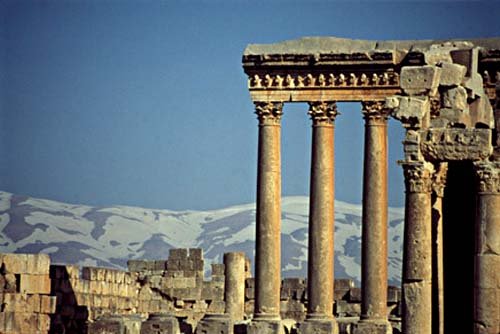
Excerpt from an August 15th article that was posted on the Bloomberg website called Israel-Hezbollah War Endangers Archaeological Sites, Ecosystems: As a friend told me, it is unfortunate that one of the places where there is the most violence today is the same place that many key historic figures came out of to teach peace!

"The Roman temple complex in the Lebanese town of Baalbek has somehow endured the region's centuries of bloody-minded conflict. But it may not survive the latest bombing raids of Israeli fighter planes, which destroyed two buildings in the town square and damaged the Temple of Bacchus.

The well-preserved structure, which has withstood wars and earthquakes since its construction in 150 A.D., was cracked in the raids. The nearby Temple of Jupiter, the largest religious structure of the Roman Empire, is so far unscathed. Both buildings are among the great examples of Roman architecture still standing.

Baalbek is just one of many archaeological treasure troves in the Beqaa Valley to fall victim to shelling. In addition, the ancient city of Tyre, with its important archaelogical sites and architecture, also has come under fire. There is no information yet on possible damage to the city's Roman and Phoenician ruins, according to Gaetano Palumbo, director of archaeological conservation for the World Monuments Fund.

Beirut and Sidon, about 27 miles to the south, both have important historic buildings going back to the 10th to 13th centuries, Palumbo says. Among those structures is Chehabi Citadel in Hasbaya, which is on the fund's 2006 most-endangered list. A fortress for the armies of the First Crusade in the 11th century, the Citadel was taken over in the 12th by the Chehabi emirs, whose descendants occupy it to this day.

Damage in Arqa

Israeli bombing raids destroyed the modern bridge at Arqa, about 62 miles north of Beirut. Just 70 feet from that bridge, according to the Biblical Archaeology Society, is an excavation site believed to have been damaged in the pounding -- including Hellene and Iron Age pottery pieces and the structures that house them.

Israel is also getting hammered. Archaeologist Ryan Byrne, speaking by telephone from Memphis, Tennessee, says he was forced to leave Tel Dan, one of the more important sites in the Golan Heights near the Israel-Lebanon border, after two of Hezbollah's rockets hit a megalithic cemetery nearby.

The site, which chronicles some 9,000 years of human history, is better known for the world's oldest intact arched gateway, a 4,000-year-old, mud-brick structure now protected under a modern shelter but still quite vulnerable to the errant missile.

Jeroboam's Altar

No real damage was done here, but Byrne and his team have packed it in and postponed further work until next summer. Also on site is an altar set up by King Jeroboam. ``Standing on top of it, you have a good view of the war,'' Byrne says.

Megiddo, or ``Armageddon'' as the Greeks like to call it, has been home to 37 different cities over thousands of years and is a trove of archaeological treasure. Excavators can see -- and feel -- incoming missiles, but this Unesco World Heritage Site has not been directly hit, yet.

Some Christians believe the Apocalypse is to take place here, with Megiddo a staging area for the final battle between good and evil, according to the Book of Revelation. Good is expected to prevail, a victory that will presage the Rapture, in which the saved are rewarded with eternal paradise, while the rest suffer the travails of a violent earthly existence.

Archaeology sites and ancient temples aren't the only cultural attractions under fire. The Baalbeck International Festival shut down on July 12, canceling the Eifman Ballet Theatre of St. Petersburg, the Budapest Symphony Orchestra/Nice Opera joint production of ``Lucia di Lammermoor'' and a rock concert by Deep Purple."


IDF Commander: “What We Did Was Insane and Monstrous”
The Israeli newspaper Haaretz has published an interview with an IDF commander who has confirmed the Israeli military used phosphorous shells during the war even though they are widely forbidden by international law. The commander also estimated that the IDF fired about 1,800 cluster bombs, containing over 1.2 million cluster bomblets. The Israeli commander said "What we did was insane and monstrous, we covered entire towns in cluster bombs.” (DemocracyNow)


___________________________________________

Saturday, September 16, 2006
UN rapporteur ends mission to probe Israeli violations of right to food
By Iman Azzi


BEIRUT: "Intentionally destroying civilian infrastructure, including factories which produce food, is a war crime under international law," the UN Human Rights Commission's special rapporteur for the right to food said Friday as he ended a five-day fact-finding mission to Lebanon.

Jean Zeigler, an independent human rights expert who is consulting for the world body, arrived in Lebanon on Monday to gather first-hand information, establish facts and investigate persistent allegations of violations of the right to food during the recent conflict with Israel.

Zeigler's investigations focused on the long-term effects on Lebanon's farming and fishing industries, with specific attention to water availability, after Israel unleashed a 34-day bombing campaign on the country in reaction to the abduction of two Israeli soldiers during a cross-border raid by Hizbullah on June 12.

"The irrigation system was completely destroyed. Paradoxically the irrigation cannot be fixed until the de-mining is done. If you irrigate the fields, the bomblets will move and make the process more difficult," Zeigler told reporters at the Beirut Marriott Hotel.

Without proper irrigation, Zeigler added, crops that have already been planted will dry up.

"The water damage is quite impressive," he said. "Reservoir pumps are mostly destroyed. Lebanon is already a dry country, and water in the South is 500 or 600 meters underground. They need these pumps not only for farming but for health reasons."

Even before the war, Lebanese citizens were consuming only 60 liters of water a day instead of the 120 liters recommended for consumption and hygiene by the World Health Organization.

"I've seen many post-conflict areas - Ethiopia, Somalia, Bangladesh - and generally there is heavy destruction but never have I seen a situation where there is all this destruction and the problem of the 1.2 million bomblets, hanging on trees, laying in the fields, on the ground, impeding reconstruction," Zeigler, said.

"The destruction of infrastructure makes it hard, if not impossible, to resume agricultural works. These bomblets were dropped in over 450 locations and although they have started to be removed in the fields - olive, citrus, tobacco - it will take years to clear."

Forty percent of Lebanese are directly or indirectly dependent on the agricultural sector and many farmers must take out loans to pay for new crops.

"Farmers pay last year's debts with this year's harvest," he said. "The cycle of debt will worsen as they will not be able to plant this season.

Over 8,000 Lebanese families rely on fishing. Ziegler warned that the full effects of the oil spill can not be known. As an example, he mentioned that after the Exxon Valdez oil spill in Alaska, the eco-system broke down three years after the initial spill.

Zeigler, a professor by training at universities in Paris and Geneva, examined the situation according to standards of basic human rights and according to international humanitarian law: "We went wherever we wanted with no restriction, thanks to the Lebanese government's efficient cooperation."

Ziegler's work follows a visit last week by four other UN special rapporteurs on the rights to health; adequate housing; extrajudicial, summary or arbitrary executions; and on internally displaced persons. He is expected to present his final findings and recommendations to the UN Human Rights Commission in the coming week.


Copyright (c) 2006 The Daily Star


What does this mean for Hezbollah's goal in getting the land back?

Wednesday, September 13, 2006 Army accuses Israel of altering Blue Line

By Agence France Presse (AFP)


BEIRUT: Lebanon has protested to the United Nations, claiming that Israeli forces have erected a barbed-wire barrier inside Lebanese territory, a Lebanese Army spokesman said Tuesday. "We submitted a protest to UNIFIL [United Nations Interim Force in Lebanon] on Monday because a new barbed-wire barrier, parallel to the [existing] Israeli barrier, is being built by the Israeli Army on Lebanese territory" in the South, the spokesman said. "We have told UNIFIL that the Lebanese Army considers this a shifting of the Blue Line," he added, referring to the border marked by UNIFIL after Israeli forces left most of the South in 2000 after 22 years of occupation.

The spokesman said, however, that the Lebanese Army had still not deployed along the full length of the border, as called for under the UN Security Council resolution that brought an end to the war, and was not in a position to verify the situation.

"Since 2000, Israel had not touched the line," he said. "Now Israel is in the process of exploiting the situation."

UNIFIL spokesman Milos Strugar, who said he was unaware of the complaint, said UNIFIL troops on the ground had reported seeing the Israelis erecting barriers on the Lebanese side of existing ones.

However, he said these reports had come from people without technical expertise.

"We have sent a team to investigate the reports," he said, explaining that in some cases, because of tactical considerations due to the terrain, the Israeli fences are actually inside the Jewish state's territory.

"This can be as much as 300 meters," he said.

In Kfar Kila, in the central sector across from the northern Israeli town of Metulla, AFP journalists saw the Israelis laying barbed wire 20 meters inside the old barriers for a distance of about 200 meters.

They added that over the course of recent days, UN officials had been laying out new markers along the Blue Line from Houla north through Kfar Kila and along the so-called Galilee Panhandle.

Another UNIFIL spokesman, Alexander Ivankov, said there was no question of changing the Blue Line.

"We are not doing any new demarcation," he said. "Any marking being done is purely for purposes of orientation." -AFP

(From The Daily Star)


Officials accuse Israel of laying pipes to steal water from South

By Agence France Presse (AFP)

Friday, September 29, 2006

Jihad Siqlawi

Agence France Presse

WAZZANI: Lebanese officials and residents of the South on Thursday accused the Israeli Army of stealing water from the Wazzani River. Mohammad Ghamlush, the engineer heading the Wazzani River pumping systems, told AFP that the Israeli Army sabotaged the water pumps on the river last week and installed a pipe to pump hundreds of cubic meters of water to Israel.

During the last weekly Cabinet meeting on Thursday, the government denounced what it called an Israeli violation of UN Security Council Resolution 1701, which brought 34 days of hostilities to a close.

Lebanese Prime Minister Fouad Siniora discussed the issue over the phone with UN Secretary General Kofi Annan on September 22, according to the National News Agency.

In a region where water is scarce, the issue may have dramatic consequences and the UN Interim Force in Lebanon (UNIFIL) has begun to look into the matter.

"We did not yet get information on the water pumps from the patrols dispatched to Wazzani, upon a request from the Lebanese government," UNIFIL spokesman Alexander Ivanko told AFP.

However, he confirmed that Israeli workers and civilians have been repairing water pipes in the nearby village of Ghajar.

Ivanko said the Israelis had violated the UN-drawn border line between the two countries to fix the water pipes.

"We have informed the United Nations headquarters in New York about this," he said.

An Israeli Army spokesman said the military was investigating the issue.

Ghamlush said that on September 22, members of an Israeli patrol broke into the pumping station installed by the Lebanese Energy and Water Ministry in Wazzani.

The soldiers sabotaged the pumping machines and ordered him to leave the premises, he said.

Ghamlush said the International Committee of the Red Cross (ICRC) helped Lebanese government workers to install two new power generators to restart the pumping systems.

He said Israel has installed two water pumps to transport water from the Wazzani through two pipes, which run toward villages in Israel.

Ghamlush said the Israelis were pumping between 200 and 300 cubic meters of water from the Wazzani every day .

Wazzani Mayor Ahmed al-Mohammed has accused the Israelis of giving weak excuses. He said they were claiming that the operation was "legal," as the Israeli pumps were on the Israeli side of the border.


Israelis settle in for long stay in village of Ghajar

By Rym Ghazal
Daily Star staff
Wednesday, September 27, 2006

ABBASSIYEH, Lebanon: The once divided Southern town of Ghajar, half occupied by Israel and half within Lebanese territory, appears to have been finally reunited under one flag. "Khalas, it is gone. It is a new Israeli town and they are even repainting it in Israel's favorite colors, pink and yellow," said 16-year-old shepherd Walid Ain Zat, who along with his two younger brothers regularly tends his flock of goats in the open fields near the border town.

Ghajar appears to be excluded from reports that circulated Tuesday announcing that Israel has withdrawn from 90 percent of the territory it held in the South after the recent month-long war on Lebanon.

"I guess no one will ever be coming out of or going in there again," said Ain Zat, who wasn't the only Southern resident to notice "changes" in Ghajar, such as the raising of an Israeli flag and an increase in the "pinkness" of its homes, a color often associated with Israeli settlements.

Until 1967 Ghajar was an Alawite Syrian village on the Syrian-Lebanese border. It was captured by Israeli forces when they took the Golan Heights in the war that year. But it was liberated as Israel withdrew from most of the South in May 2000 and then divided by the UN, which transferred two-thirds of the village to Lebanese control with the Blue Line running through the middle of Ghajar at its narrowest point.

Today, the single narrow road that led to the town where Hebrew and Arabic are spoken interchangeably lies destroyed by an Israeli air strike. A huge crater now blocks the road mere meters from the town's entrance and freshly dug dirt walls have been piled around its perimeter in a fortress-like manner.

This reporter walked as close as possible to the town's entrance before being greeted with loud "clicks" and movement by what appeared to be Israeli soldiers on nearby rooftops.

Plainclothes Lebanese intelligence officers stationed nearby have been warning local residents to avoid getting "too close" to Ghajar after reports of "warning shots being fired" at passersby following the August 14 cease-fire.

"The town's story is in its name," said an elderly man in the village of Ain Arab as he sat in front of the Jamal al-Ihmar shop - a landmark on the way to Ghajar, Arabic for "gypsies."

"The people there never really belonged to anyone, so it was easy for Israel to come and make [the village] one of its own," the man added.

The old man recalled a time when the residents of Ghajar "used to celebrate our weddings with us and we used to attend each others' funerals before Israel came and destroyed the relations between Ghajar and the nearby villages."

In the 1970s, Ghajar residents adopted a pragmatic approach to their predicament, accepting Israeli citizenship while maintaining their belief that one day they would be returned to Syria.

"I think Israel will be able to keep this town as it is originally Syrian and its people accepted Israeli citizenship and kept to themselves and confined their movement to within Israel," said Mohammad Shehab, a resident of Abbassiyeh, a town with its own share of grievances against Israel.

One million square meters of Abbassiyeh lie within the disputed Shebaa Farms occupied by Israel.

"I don't think Ghajar will get the same attention as the Shebaa Farms if Israel decides to stay in it as its residents took Israeli citizenship," Shehab added.

In response to queries from The Daily Star concerning Ghajar, Prime Minister Foaud Siniora's office said: "Israel has to withdraw from all Lebanese land as outlined in UN Security Council Resolution 1701, without any exceptions."

"We are aware of the special case of Ghajar and it has been discussed with both the Israeli and Lebanese armies," Alexander Ivanko, spokesperson for the United Nations Interim Force In Lebanon, said.

There is "a lot of concern" over the issue, Ivanko added. Accordingly, UNIFIL is "working on a solution amiable to all the parties involved."

Ghajar's dual identity is not the only issue at play, however; the divided town has been the scene of repeated confrontations between Hizbullah and Israel since the latter's withdrawal in 2000.

The Israeli Army's Northern Command declared its half of the town a closed military area in the summer of 2001, restricting the movements of the village's residents.

Ghajar made headlines in April after Lebanon rejected Israel's plans to erect a "security wall" to divide the town. Hundreds of villagers demonstrated against the proposal, raising banners saying "We are Arab Syrians and this land is Arab" and "We call on the Lebanese government and Hizbullah to prevent Israel from building a wall to divide the town."


Latest update on Ghajar:

Wednesday, November 08, 2006

Israeli troops leave areas near Ghajar

By Iman Azzi
Daily Star staff

BEIRUT: Israeli troops have begun withdrawing, and were due to completely pull out Tuesday night, from most of the surrounding areas near the occupied village of Ghajar. The United Nations Interim Force in Lebanon (UNIFIL) reported on Tuesday that the troops had left two communities around the divided border village in South Lebanon.

UNIFIL spokesperson Milos Strugar confirmed the Israeli withdrawal from two Lebanese villages, Barzan and Ain Arab, and lands around Ghajar after a meeting held at the Ras al-Naqoura border crossing between UNIFIL and Lebanese and Israeli officials.

"The Israeli Army was occupying a much larger area than Ghajar and has withdrawn from a few kilometers inside Lebanese territory to 200 meters north of the village and northern Ghajar," Strugar told The Daily Star in a telephone interview Tuesday.

Israel has not set any date to withdraw from the remaining land occupied by the Jewish state this summer, Strugar said.

UNFIL's commander, Major General Alain Pellegrini, hailed the move as a positive first step that would hopefully be followed by a full withdrawal from the Lebanese part of Ghajar.

More meetings are expected to take place to set a mechanism for Israel's full withdrawal.

"I welcome the [Israeli Army] withdrawal from the area around Ghajar," Pellegrini said in statement released by the UN. "I hope that we will reach an agreement very soon for full [Israeli Army] withdrawal from the Lebanese territory, in accordance with UN Security Council Resolution 1701, including the northern part of Ghajar."

According to a UN-demarcated "Blue Line," which set the border between Israel and Lebanon following Israel's May 2000 withdrawal from most of the South, one-third of the village is on Lebanese soil, while the other two-thirds are on Syrian territory, part of the Golan Heights which Israel has occupied since 1967. Its residents are primarily Alawites, most of whom have obtained Israeli citizenship, although they consider themselves Syrian.

A complete withdrawal from northern Ghajar would put Israeli forces behind the Blue Line for the first time since the July-August war.

UNIFIL pledged in a statement released Tuesday that it would carry out "intensive patrolling and set up temporary checkpoints" in the Lebanese section of Ghajar once Israel completes its withdrawal.

UNIFIL has been in discussions with the Israeli military since last month in an effort to convince them to withdraw from Lebanese territories and to respect the Blue Line. On October 26, a UNIFIL statement said "minor administrative issues" continued to delay the pullout of Israeli forces from the Lebanese part of Ghajar.

Israeli troops remained in the Lebanese parts of Ghajar and Al-Abbad Hills after their October 1 withdrawal from most of South Lebanon. That came almost seven weeks after a UN-brokered cease-fire took effect on August 14.

The Israeli military continues to occupy Lebanese territory in the Shebaa Farms and the Kfar Shouba Hills. - With agencies

Saturday, September 09, 2006

Galloway with the skynews !

British parliament member George Galloway speaks strongly about his views on the war between Hezbollah and Israel.

http://news.sky.com/skynews/video/videoplayer/0,,31200-galloway_060806,00.html

Chance of a "round two" war between Lebanon and Israel

Published on Wednesday, August 23, 2006 by MediaChannel.org
As a New Israeli War Threatens, What Can We Do?
by Danny Schechter


If at first you don't succeed, try, try again.

That old saw seems to be driving Israel's decision makers as they decide if, whether, and when to restart their war with Hezbollah - "to finish the job," of course.

Warrior societies like Israel's are not used to losing wars, or to, what's often worse, project the perception that they have lost, or are weak in any way. After all, they are the strongest kids on the block with more firepower, weaponry and trained units than any of their neighbors. They see themselves as a modern day Sparta. They are as self-righteous in their convictions as any of their critics.

As the rest of the world focuses on Iran obtaining nuclear weapons, there has been little attention paid to Israel's long existing nuclear arsenal. Israel has not suffered for the best US supplied technology in the air, on the land and on the sea. Any assessment of who has more bang - and buck - has to lean in Israel's favor. The alarms you hear of Israelis being driven into the sea is used as way of reinforcing fear and paranoia and conditioning a population whose fears of another holocaust seems real.

There is a psychological and political problem here that the news world has not caught up with.

First Israel has persuaded itself that it is surrounded by terrorists and that, for the most part, most of its neighbors either are terrorist backers or supporters. Once you have stereotyped your enemies as a bunch of religious zealots or baby killers, they are then regarded as beyond the pale of humanity to be arrested, imprisoned, crushed and killed. You are then persuaded that talking is useless even though the only way conflicts are ever settled is when enemies negotiate.

You don't make peace with your friends.

Second, Israeli politics - like our own - is emotionally polarized with the most opportunistic right-wing forces now jumping up and down calling for vengeance and making "the hell with the UN" (a.k.a the world) their mantra. There is a rabid tone emerging that the Israeli journalist Gideon Levy fears will lead to a new righter than right-wing government and even more self-defeating military adventures. He declares in Ha'aretz: "The right won. The one clear result of this war is that the left suffered another fatal blow and the rightist camp was strengthened."

There is only one possible countervailing possibility, argues another Israeli, Uri Avnery, a real investigation of what happened.

"After every failed war, the cry for an official investigation goes up in Israel," he writes.

"Now there is a "trauma", much bitterness, a feeling of defeat and of a missed opportunity. Hence the demand for a strong Commission of Inquiry that will cut off the heads of those responsible. To have any value whatsoever, the investigation must expose the real roots of the war and present the public with the historic choice that has become clear in this war, too: Either the settlements and an endless war, or the return of the occupied territories and peace.

"Otherwise, the investigation will only provide more backing for the outlook of the Right, to wit: we only have to expose the mistakes that have been made and correct them, then we can start the next war and win."

That seems to be happening - and faster than most think as the recent Israeli incursions and flyovers of Lebanon indicate. No wonder many countries don't want to send peacekeepers with peace itself hanging by a thread.

Already Israeli leaders are talking about "the next round" as if this bloody conflict is a tennis match. The New York Sun which is aligned with the Israel hardliners reports:

"Any chance of long-term peace between Lebanon and Israel all but vanished last night after the Israeli defense minister, Amir Peretz, said his country was preparing for another round of fighting.

"Mr. Peretz spoke only hours after Israeli commandos mounted a raid deep inside Lebanon. Secretary-General Annan said it was a violation of the week-old U.N. cease-fire.

"We will put everything on the table," he was quoted as saying. "Our duty is to prepare for the next round."

President Bush is now calling for UN peacekeepers to be rushed to the border after his own strategy had deliberately delayed the ceasefire for weeks to give Israel more time to do more damage and frighten off international engagement. That old Native American phrase, "White man speaks with forked tongue" comes to mind.

There is a feeling of pessimism and darkness on all sides. The Tel Aviv newspaper Haa'retz just ran a piece by Nadim Shehadi, a Lebanese economist who is not affiliated with Hezbollah, suggesting that Israel has become a failed state.

"What is the logic that will emerge from this war?," he asks.

"If Israel can exist only by destroying the neighborhood, then it's time to declare it a failed state. The Zionist dream has turned into a nightmare and is not viable. If the future holds more of the same, then the time has come to reconsider the whole project.

"Every state has a duty to defend its citizens, but also it has a duty to provide them with security and the two are different. The prospects are for more destruction, fanaticism, violence and hatred. No unilateral separation can isolate Israel from this, nor can the region or the world live with the consequences. This seems to be the only choice, and Israel must do itself and others a favor and go away."

You can be sure that Israel is not "going away" any time soon, but it is also clear, now more than ever, as a new war certain to claim more lives threatens that those who favor peace, especially Jews who believe in democracy and opposed fanaticism on all sides, must speak up.

Our media must also open up to their voices. If we ever needed "peace journalism" to explore ways to resolve conflicts, we need it now. Focusing on the dead is easy - finding creative ways to use the world's vast media machine to promote peaceful outcomes is essential.

News Dissector Danny Schechter blogs at Mediachannel.org. Info on his latest film at Indebtwetrust.com. Comments to dissector@mediachannel.org

Friday, September 01, 2006

A MUST SEE documentary that would never be shown on public television!

Peace, Propaganda and The Promised Land is a documentary that was put together not long ago. It mainly focuses on the Palestinian-Israeli conflict, which is a vital part in understanding many of the problems going on in Lebanon. It speaks of the way this conflict is portrayed by the American media and why there is such a misunderstanding of it as a result of the coverage.

You can download the documentary at (if it doesn't work, type in the name and do a search):

Monday, August 21, 2006

Tribute to a Son: The Grossman Tragedy

Published on Sunday, August 20, 2006 by the Guardian / UK
Uri, My Dear Son
As the Lebanon war raged, David Grossman, the celebrated Israeli writer, publicly urged his government to accept a ceasefire. Just days later, his soldier son was killed by one of Hizbollah's final anti-tank missiles. This is the eulogy he read at the funeral
by David Grossman

At 20 to three in the morning, between Saturday and Sunday, the doorbell rang. Over the intercom, they said they were from the army. For three days, every thought begins with: 'He/we won't.'

He won't come. We won't talk. We won't laugh. He won't be that kid with the ironic look in his eyes and the amazing sense of humour. He won't be that young person with understanding deeper than his years. There won't be that warm smile and healthy appetite. There won't be that rare combination of determination and gentleness. There won't be his common sense and wisdom. We won't sit down together to watch The Simpsons and Seinfeld, and we won't listen to Johnny Cash, and we won't feel the strong embrace. We won't see you going to talk to your brother, Yonatan, with excited hand movements and we won't see you hugging your sister, Ruthie, the love of your life.

Uri, my love. All your short life, we have all learned from you, from the strength and determination to go your own way. To go your own way even if there is no way you could succeed. We followed with amazement your struggle to get into the tank commanders' course. How you never compromised with your commanders, because you knew you would be a great commander. You were not satisfied to give less than you thought you could. And when you succeeded, I thought here's a man who knows his own abilities in such a simple and wise way. Here's a man who has no pretensions or arrogance, who isn't influenced by what others say about him, whose source of strength is internal.

From childhood, you were like that. A child who live in harmony with himself and those around him. A child who knew his place, and knew that he was loved, who recognised his limitations and strengths. And truly, from the moment you forced the army to make you a commander, it was clear what kind of commander and person you were. We hear today from your comrades and your subordinates about the commander and friend. About the person who got up before everyone else in order to organise everything and who went to sleep only after everyone else had. And yesterday, at midnight, I looked at our house which was quite a mess after the visits of hundreds of people who came to console us and I said to myself: 'Well, now we need Uri, to help us organise it again.'

You were the leftie of your battalion and you were respected for it, because you stood your ground, without giving up even one of your military assignments ...

You were a son and a friend to me and to Mummy. Our soul is tied to yours. You felt good in yourself and you were a good person to live with. I cannot even say out loud how much you were 'Someone to Run With'. Every furlough you would say: 'Dad, let's talk' and we would go, usually to a restaurant, and talk. You told me so much, Uri, and I felt proud that I was your confidante.

I won't say anything now about the war you were killed in. We, our family, have already lost in this war. The state of Israel will have its own reckoning ...

Uri was such an Israeli child; even his name was very Israeli and Hebrew. He was the essence of Israeli-ness as I would want it to be. An Israeli-ness that has almost been forgotten, that is something of a curiosity. And he was a person so full of values. That word has been so eroded and has become ridiculed in recent years. In our crazy, cruel and cynical world, it's not 'cool' to have values, or to be a humanist, or to be truly sensitive to the suffering of the other, even if that other is your enemy on the battlefield.

However, I learned from Uri that it is both possible and necessary to be all that. We have to guard ourselves, by defending ourselves both physically and morally. We have to guard ourselves from might and simplistic thinking, from the corruption that is in cynicism, from the pollution of the heart and the ill-treatment of humans, which are the biggest curse of those living in a disastrous region like ours. Uri simply had the courage to be himself, always and in all situations - to find his exact voice in every thing he said and did. That's what guarded him from the pollution and corruption and the diminishing of the soul.

'In the night between Saturday and Sunday, at 20 to three in the morning, our doorbell rang. The person said through the intercom that he was from the army, and I went down to open the door, and I thought to myself - that's it, life's over. But five hours later, when Michal and I went into Ruthie's room to wake her and tell her the terrible news, Ruthie, after first crying, said: 'But we will live, right? We will live and trek like before and I want to continue singing in a choir, and we will continue to laugh like always and I want to learn to play guitar.' And we hugged her and told her that we will live.'

We will derive our strength from Uri; he had enough for many years to come. Vitality, warmth and love radiated from him strongly, and that will shine on us even if the star that made it has been extinguished. Our love, we had a great honour to live with you. Thank you for every moment that you were ours.

Father and Mother, Yonatan and Ruthie.

Translated from the original Hebrew by Joseph Millis, world news editor of the Jewish Chronicle